To be fair, a duress pin is definitely a good thing to have if you’re being mugged, but using it to deliberately destroy data when it’s been seized by a lawful authority is guaranteed to land you in serious trouble pretty much anywhere. Whether the border agents were, in fact, a lawful authority, and whether they had a lawful reason to seize his phone are very different questions.
The much more sensible approach is to either have a separate phobe for travelling, that has nothing you care about on it, or wipe your phone before you travel, and spend a little time building up an innocuous history on it, without putting anything you care about on it. Anything you absolutely must have access to while you’re away can be stored, encrypted, online, and you can remember the details to retrieve it.

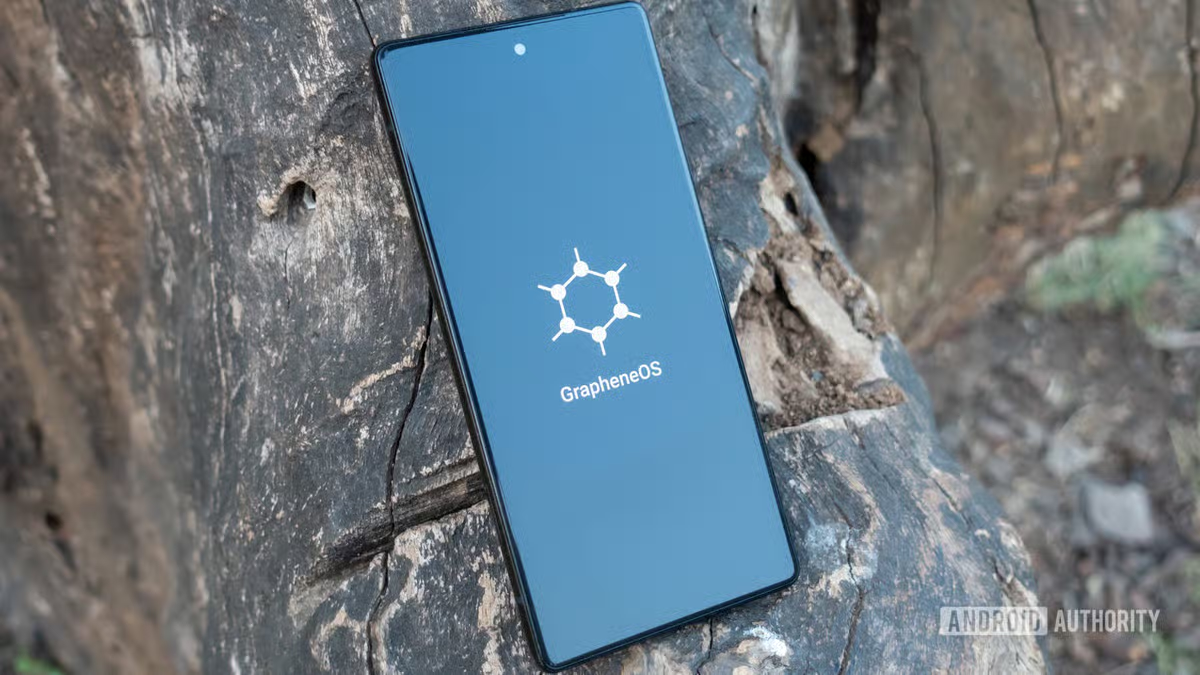 Android AuthorityGrapheneOS duress PIN could land a man in prisonA US man is being prosecuted after allegedly using a GrapheneOS duress PIN to wipe his Pixel during a border search.