posted in Technology

The return of supersonic flight hinges on the race to solve one big hurdle | CNN
The skies of Oklahoma City roared for six months in 1964 as military aircraft intentionally rattled the population below with a daily barrage of thunderous sonic booms. It was a controversial test — the consequences of which have lingered to this day.
Two approaches in the works could revolutionize air travel by making future supersonic passenger planes compliant with the FAA’s new noise rules: Colorado-based company Boom Supersonic, which is specifically mentioned in the FAA proposal, plans to use physics to prevent sonic booms from ever reaching the ground, regardless of plane design. NASA, on the other hand, is flying an experimental plane called X-59 that is specifically designed to reduce the intensity of the boom.
www.cnn.com/2026/08/06/science/supersonic-flight-comeback-sonic-boom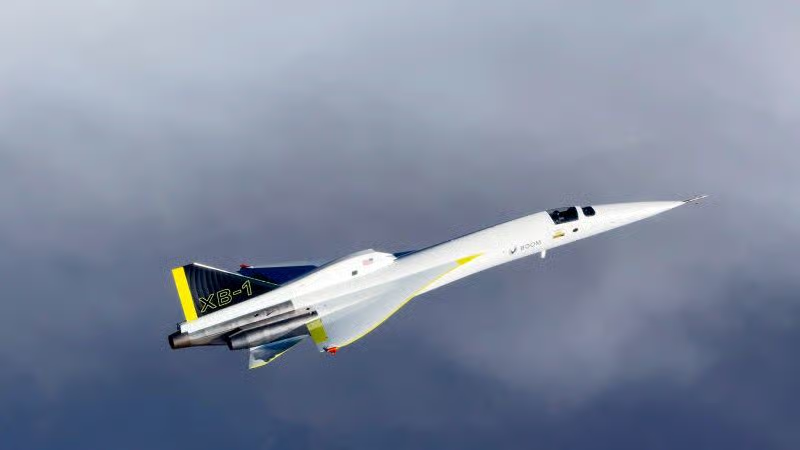 CNNThe return of supersonic flight hinges on the race to solve one big hurdle | CNNFifty years after a US ban, the door is cracked open again to faster-than-sound travel over land. And experts think they finally have an issue that killed it.