posted in Technology

I Reviewed Late-2000s Digital Cameras. Allow Me to Remind You Why We All Switched to iPhones.
finally, a "what to buy" article that says "don't buy"
www.nytimes.com/wirecutter/reviews/iphone-camera-vs-old-school-point-and-shoot/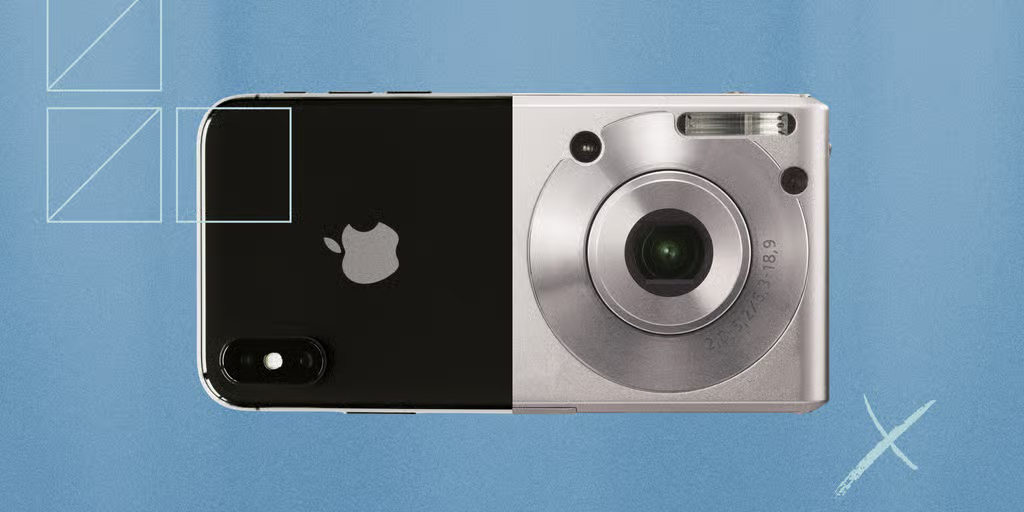
posted in Technology
I Reviewed Late-2000s Digital Cameras. Allow Me to Remind You Why We All Switched to iPhones.
finally, a "what to buy" article that says "don't buy"
www.nytimes.com/wirecutter/reviews/iphone-camera-vs-old-school-point-and-shoot/
Replying to @Aatube@kbin.melroy.org
I still have an iPhone and I prefer the pictures my Fuji Finepix took back in the 2000s. It didn’t put that weird fisheye effect on landscapes that make background objects look like they’re a kilometre away when they were only a few meters away. I’m still surprised by how good those pictures are, and the way the lens automatically extends and retracts is just joyful. I never think that of my iPhone.
The pictures are more grainy, and have other shortcomings. But they look like what I saw with my eyes.
Replying to @Seimhe@lemmy.world
hmm, i've never had problems with background objects in phone pictures.
Replying to @Aatube@kbin.melroy.org
Most people I’ve mentioned it to don’t seem to notice. A more obvious example is distant objects like mountains, or the moon, looking absolutely tiny. But it happens with objects just a few meters away.
Replying to @Seimhe@lemmy.world
I had a fuji finepix around 2010. It was probably user error, but I could not get action shots. Anytime with movement was always blurry, even when I set it for action. For more still shots, the pictures were great, but I wasn’t sad to stop using it with better phone cameras.
Replying to @BassTurd@lemmy.world
We did some amount of joking around with the camera and I don’t remember getting a blur, but I was able to change settings to achieve it and get some nice effects like when car lights leave long red streaks behind them. I was lucky though, I had someone explain the main settings to me like ISO and shutter speed.
Replying to @Seimhe@lemmy.world
I had decent resources, and even the auto settings should have helped out in some situations, but rare success. I do think there’s a real possibility I had a faulty product, but I never bothered to dig further. Within a year or two phone cameras took the reigns, so I moved on
Replying to @Seimhe@lemmy.world
Probably has to do with focal length. There’s only so much you can do when the distance from the lens to sensor is only a few mm. So you’re going to end up with some perspective distortion. I think some phones might try to alleviate it with software.
Replying to @Dultas@lemmy.world
Yes, barrel distortion correction has been a basic software feature for decades.
There are very few (sub-$1500) point-and-shoot digital cameras of decent quality to even compare any more*. The ones that are left are targeted at vloggers, and despite how neat phone camera technology is (and it is incredible), it’s often astonishing how good a compact camera with a modern sensor and decent zoom has gotten.
It’s a shame the market got hollowed out by phones, because over the past few years, phones have just gotten more hallucinatory with their output images in an attempt to “fix” the photos they’re talking, and hardware innovation has stalled out. Because of course it has. They don’t have the space of a dedicated camera.
* IMO it is a disservice to Sony that the author mentions their $1500 camera but not the very similar ZV-1 model that’s only $800.
 YouTubeWhy New Smartphone Cameras Feel Worse
I really don’t like how my phone does this. I wish i could turn it off.
Edit: i think i did turn it off as much as i could…
Replying to @XLE@piefed.social
and hardware innovation has stalled out. Because of course it has. They don’t have the space of a dedicated camera.
You’re totally not going to fit even a micro four thirds sensor in a phone, but there are a bunch of Chinese phones with larger sensors. Although they can be a PITA to find if you’re on the US, reviews like them.
I suspect the reason why we don’t see them from the mainline phone manufacturers comes down more to hardware BOM cost than packaging or size.
 en.wikipedia.orgList of large sensor camera phones - Wikipedia
Replying to @IMALlama@lemmy.world
I think Sony has a few large sensor camera phones
Replying to @XLE@piefed.social
over the past few years, phones have just gotten more hallucinatory with their output images in an attempt to “fix” the photos they’re [taking]
Meanwhile, here I am with my non-stock-firmware and third-party camera app, and I’m not sure I even have access to those fancy computational photography features to begin with.
Replying to @XLE@piefed.social
Older model Sony RX100 still hold up, I think the 3 had a lovely sensor. Super portable and relatively cheap if you don’t need/want modern video modes.

Replying to @Aatube@kbin.melroy.org
@Aatube I haven't switched to iPhones and never will.
Replying to @masayuki60@vivaldi.net
doesn't have to be an iPhone. you could also use an Android with OldRoll, or as the article mentions a disposable film camera.

Replying to @Aatube@kbin.melroy.org
I never took those cameras seriously real glass kicks ass iphones are trash.
Professional movies are shot on iphone sometimes :p
Replying to @sem@piefed.blahaj.zone
Okay humour me, which ones?
I don’t know off the top of my head, but I did a search in here the results.
I thibk the ones I had heard of were Tangerine and maybe the Stephen Soderberg ones.
 Collider12 Movies That Were Shot on iPhones, RankedFrom the anticipated sequel to 28 Days Later to Sean Baker's drama Tangerine, we explore some movies partially or entirely shot on iPhones.
Replying to @sem@piefed.blahaj.zone
These are all experimental short films. You are almost always going to get weird and wonderful techniques used in those and they’re uousually not created by “professionals”
Replying to @Melonpoly@lemmy.world
https://en.wikipedia.org/wiki/28_Years_Later is the $150-million gross sequel to the trailblazing 2002 28 Days Later, which reinvigorated zombie horror.
The themes of https://en.wikipedia.org/wiki/Tangerine_(film) (2015) laid the groundwork for the same director's Oscar-winning https://en.wikipedia.org/wiki/Anora .
 en.wikipedia.org28 Years Later - Wikipedia
Crux of Article:
But it would be a shame to see you blow hundreds of dollars on a “vintage” point-and-shoot (a phrase I cannot believe I’m actually typing) or the reanimated corpse of a long-dead pocket camera under the mistaken impression that it’s anything more than a toy destined for the junk drawer once the novelty wears off after a few weeks.
…
So I have to chuckle when I hear anyone waxing romantic about the vibe of those old pocket-cam photos, because their grainy, blurry, flat shots were a serious source of discontent back in the day. The search for the least-worst image quality was the entire reason I had a job.
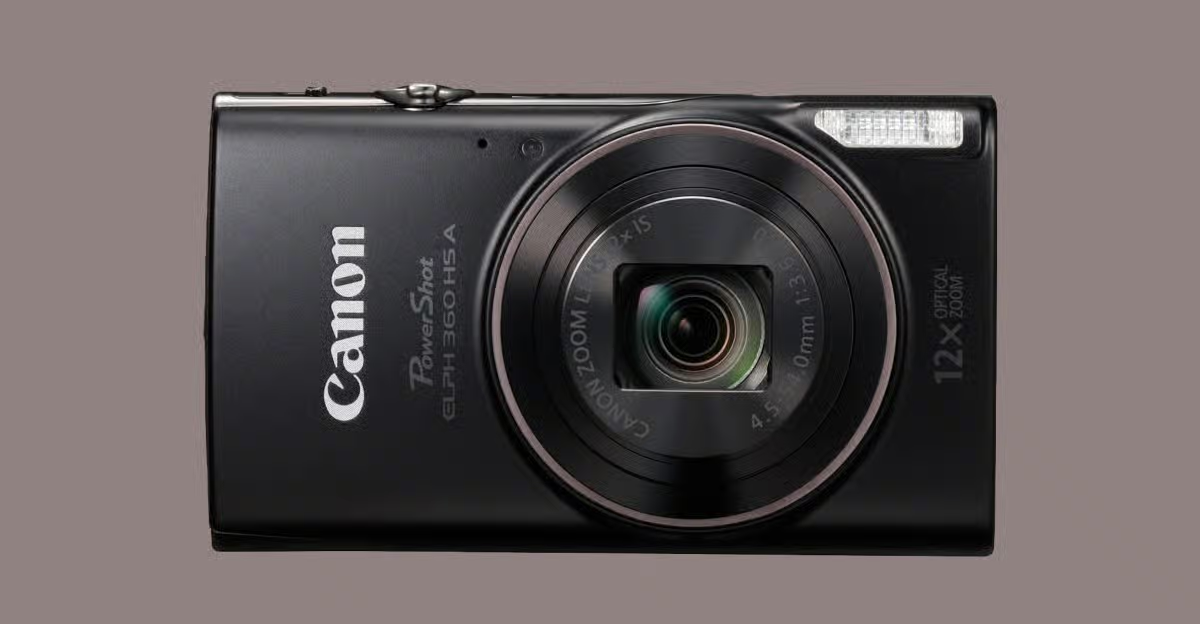 The VergeCanon is bringing back a point-and-shoot from 2016 with fewer features and a higher price (it’s viral)A $379 point-and-shoot with a USB Mini port — in 2025.
Replying to @Aatube@kbin.melroy.org
My Minolta Dimage was pretty decent in it’s time; I used it at a wedding and got better photos than the professional photographer using film. It was all about understanding the device’s strengths and limitations. The Dimage was great because it had a solid burst mode, so I’d take 1,000 photos where the professional took 30.
Of course, I still eventually moved on from that camera to a decent DSLR camera, which I still use when I go somewhere with the intent to take composed photos.
But the old rule still bolds true: the best camera to use is the one you have on you when the photo presents itself. And everyone tends to have their phone handy, even if they have limited control over focal depth and aperture and try to make up for it in post.
Replying to @Aatube@kbin.melroy.org
I understand why people want to go back to older analog things to try and stay offline, but the issue isn’t your phone itself. The issue is the apps that you load up on your phone that are there just to keep you distracted. Remove those, and your phone goes back to being a useful tool instead of a black hole for attention.
Replying to @voytrekk@sopuli.xyz
the issue is a lot fucking bigger than that. It’s an era of mass surveillance where we all willingly chose to carry tracking devices and microphones.
Unfortunately, removing instagram, reddit and facebook isnt enough to stop that.
Replying to @voytrekk@sopuli.xyz
The issue is the camera doesnt have half the settings a d/slr has. Phones take the artistry out of photography by giving you the “best” shot
Replying to @shweddy@lemmy.world
Its not meant as a DLSR replacement. It was a replacement for the cheaper digital cameras that people used before. You can take decent shots with a phone camera if you know what you are doing, but it will still not compete with the professional equipment if you are going for the best.
Replying to @Aatube@kbin.melroy.org
I grew up during 110 & 35mm point and shoots… I even shot on 120mm medium format a bit… then I moved to digital p&s and finally iPhones/Smartphones. As an avid photographer, I’ve also owned and used extensively my SLR and DSLR’s (and now Mirrorless “DSLR”).
I absolutely loved my Canon SR-T 101, then my Canon T6s, and finally I recently picked up a Canon R6. I own more L series glass than I care to admit and will choose that experience and the output and control I have over those photos above pretty much anything else.
But I’ll say this: the best camera to capture a moment is the one in your hand. A modern iPhone takes pretty solid photos. Definitely better than some I’ve used along the way. Is it perfect, no. But most of the time, the choice is “take a photo with what you’ve got, or miss the opportunity”. Now, for obvious reasons I don’t always carry my R6 with a 24-105L attached, but at least I can still get some decent photos.
If you like the aesthetic of an early 2000’s Point and Shoot, have fun! learn it well and it’ll probably get you some interesting photos. That’s the joy of photography. The composition, medium and subject are only part of the style and everyone can have their own flair and decide what they like.
Do I wish there were some modern P&S pocketable cameras, yep… but I already have a phone that takes up that spot and it’s always on me anyway.
Replying to @thejml@sh.itjust.works
This is what the article says on the "early 2000s aesthetic" point:
If you want noisy or blown-out photos on purpose, plenty of apps can fake it for you.
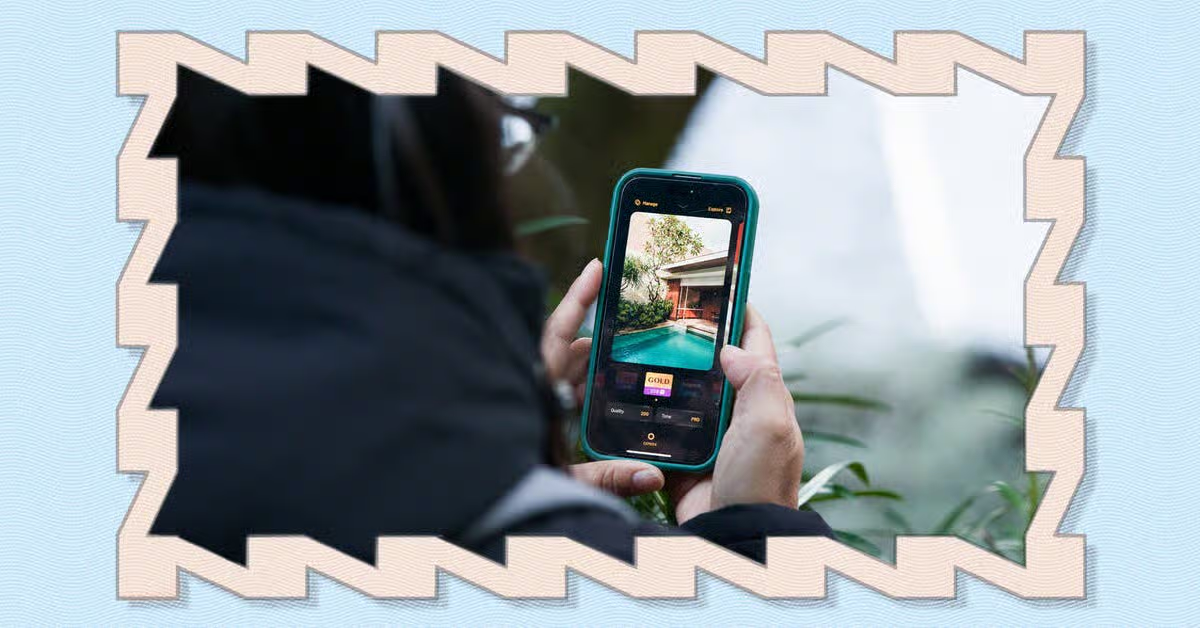 Wirecutter: Reviews for the Real WorldFinally, an iPhone Camera App You’ll Actually UseIf you’re tired of over-sharpened iPhone photos, Mood.camera is packed with natural-looking, fully adjustable presets that make mobile photography fun again.
Replying to @thejml@sh.itjust.works
Sooo, Ricoh GRiii is actually amazing. I barely use my phone for photos anymore.

Replying to @Aatube@kbin.melroy.org
I don't know if I'm alone in this, but I really don't like the basic ergonomics of taking photos with my phone. To me there's no comparison to the weight and layout of a dedicated camera.
Ok top of that, I like to fiddle with settings and focus manually, and I don't want my images to be automatically filtered through AI or scraped by Google.
I can certainly agree that a big part of photography is being in the right place at the right time and using whatever camera you have to take the photo. And I know that the phone cameras these days are pretty good and more than enough for the casual user, but I like a dedicated camera, even a cheap and old one, if only for the experience of taking photos that way.
Replying to @mrmaplebar@fedia.io
There’s other camera apps which remove the awful filters that automatically get applied and give more manual control, for example open camera or camera on fdroid

Replying to @mrmaplebar@fedia.io
The ergonomics aren’t great compared to a dedicated camera. The camera sensor not being in the middle is annoying unless your subject is far away. Having to hold the phone so that you don’t accidentally touch the screen, accidentally block the camera, etc. is not ideal. The shutter is never in a great position, even if you do something like use the volume button as a shutter.
Even flip phone cameras were more convenient than that. With those the camera was roughly in the middle, and you could hold the phone in a way that felt less awkward.
OTOH, the thing that killed cameras for me was the ergonomics of getting the pictures off the camera and backed up online. You either needed to remove the memory card from the camera, make sure you had a USB to memory card adapter, plug it into a computer, drag the files somewhere, etc. then wait for that to complete, and remember to put the memory card back into the camera.
For a short while, the cameras claimed to have WiFi, but it wasn’t like you could just connect them to your home router and let the camera connect to the Internet and upload the photos. No, the camera created its own WiFi hotspot and you had to connect your laptop or something to that hotspot and transfer the files that way.
To me, the killer feature of phone cameras (aside from always being in my pocket) was that to back up the pictures I’d taken I had to… do nothing. I’d get home, use my phone as normal, and within half an hour, the photos were already online and backed up.
Replying to @Aatube@kbin.melroy.org
Phone cameras are bullshit because you need to buy an app to get all the features a regular camera would have built in. You need an app for long exposure, aperture settings, time lapses, raw data
Replying to @shweddy@lemmy.world
the iPhone has all of that built-in, except actual aperture settings which i'll grant you. it's also much cheaper to buy an app once than a digital camera
edit: why does basically the same comment about Android have infinity more upvotes lol
Replying to @Aatube@kbin.melroy.org
Probably because upvoters know that iPhone actually can’t do long exposures (it fakes them by adding blur) and it’s time lapse photography is very limited (need a paid app for that, the default one limits the video to 40 seconds no matter how long you film), which in addition to being being unable to modify aperature settings directly (as you mention) is pretty much everything OP was asking for…
Replying to @shweddy@lemmy.world
No idea about iPhones, but at least on Android the default camera app provides all of this built-in.
Replying to @LiveLM@lemmy.zip
On Android the default camera app is usually the only app that provides all of that. Which is actually a problem. You usually lose your camera’s higher functions when you install a custom ROM and it’s usually an absolute pain in the ass to get them back if it’s at all possible because cameras and their drivers are all poorly documented proprietary crap.
Replying to @shweddy@lemmy.world
uhhh what phones have you been using? I think I’ve been able to do all of that (except for RAW, never tried) on every android I’ve had since 2012
Replying to @Aatube@kbin.melroy.org
What a biased bunch of garbage.
Replying to @bloogoose@lemmy.zip
could you elaborate?
Replying to @Aatube@kbin.melroy.org
For me it’s all about focus. Not with a lens and a receptor, but of my mind. I can’t take serious picutres with the thing I just watched cake fart fetish videos on and that my boss is calling me on while I’m trying to capture something beautiful. If you want a record of something, sure pull out your phone. If you want to force yourself to take thoughtful photographs, an actual camera is an excellent tool, even at half the megapixels.
Replying to @Imgonnatrythis@sh.itjust.works
i don't think the amount we think about what we just did changes depending on the weight that's in your hand, as you stare off into the scenery and hit the shutter
Replying to @Imgonnatrythis@sh.itjust.works
I’m in this boat (not the cake farts, I prefer muffins) but especially with ADHD I dont like that the phone “does it all”. My human brain doesn’t like that.
We all have millions of phone pics. No one cares. Looking at printed photos or pulling an old digital camera out to look at pictures is more meaningful.
Replying to @Aatube@kbin.melroy.org
No, the size of the sensor matters, and phones are mediocre cameras. I will die on this hill.
Replying to @chewypoops@lemmy.world
the point is that 2000s digital cameras are even more mediocre (except the high-end kind it mentions at the end that aren’t seeing a revival)
Replying to @Aatube@kbin.melroy.org
The article completely missed the point of CCD vs CMOS sensors. CCD tends to leak when there is a high contrast. Combined with a harsh flash it gives a distinct look for night time party photos.
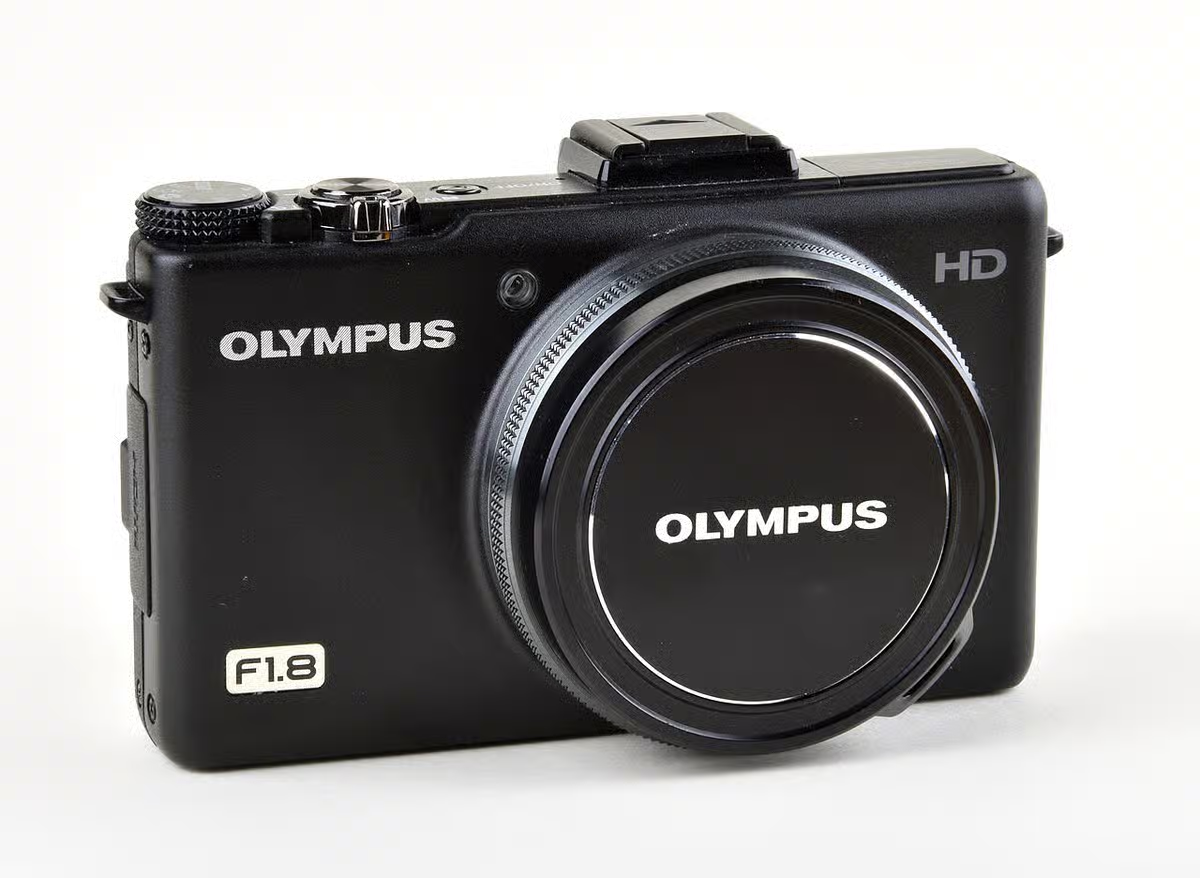 en.wikipedia.orgList of digital cameras with CCD sensors - Wikipedia
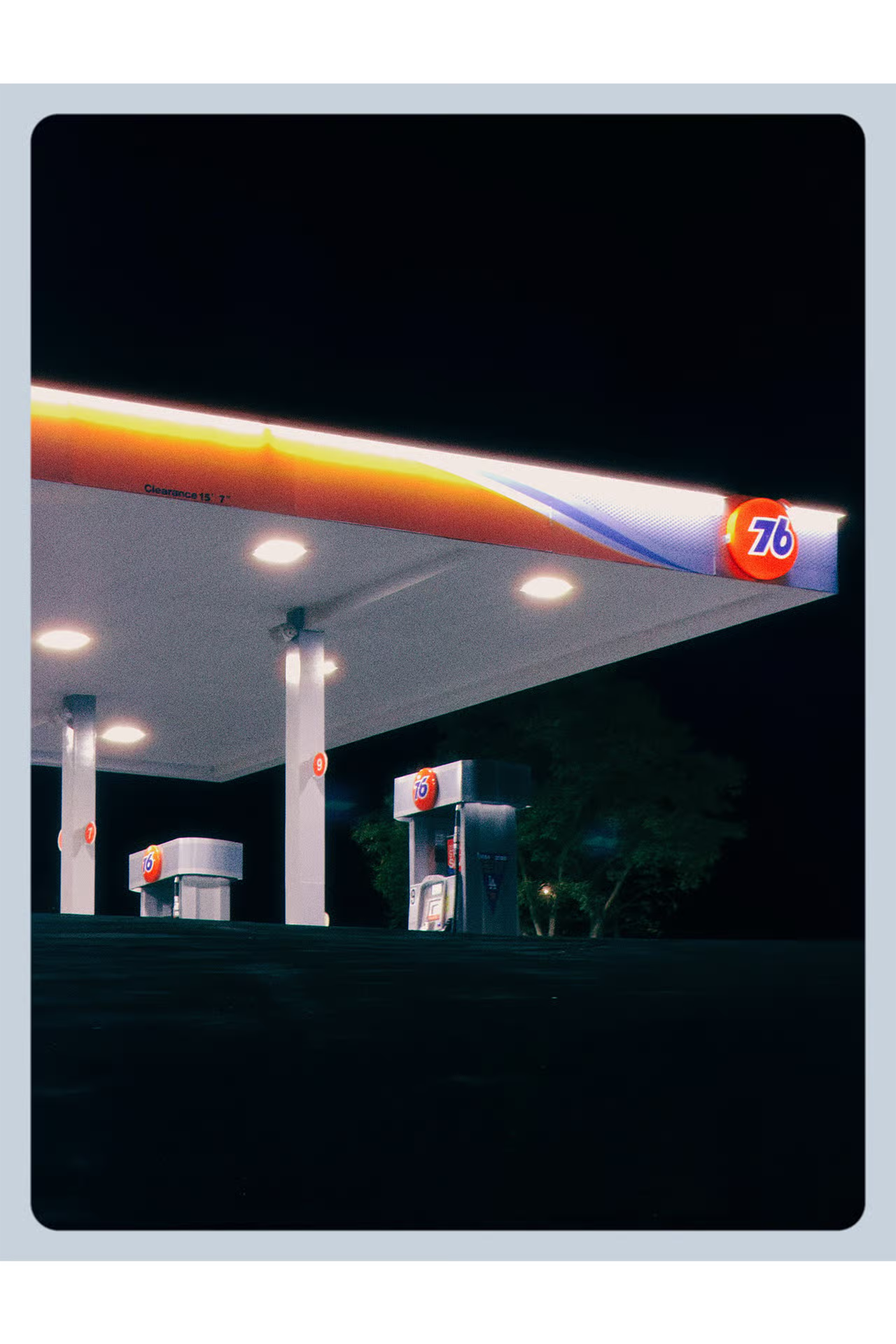
the article does address the "distinct look" part:
If you want noisy or blown-out photos on purpose, plenty of apps can fake it for you.
here's a photo from their review linked there:
Replying to @Aatube@kbin.melroy.org
That one is a more traditional film photo, not CCD bloom. But fair point.
It’s just that I have found myself in situations where groups of drunk 20-somethings ask me to take their photo with a vintage digicam. And having seen the results I get why they’re fun, the flash is strong and it makes things pop up so differently.
I guess it could be simulated, but I doubt they had the latest iPhone in their pocket and taking the photo wouldn’t have been as fun anyway. Also that flash would be difficult to make it work realistically.

Replying to @chewypoops@lemmy.world
The phone is always with you though, unlike the camera which got left at home.
Replying to @thehatfox@lemmy.world
I know I’m weird, but my camera is with me 99% of the time, in the backpack or strapped to my shoulder strap of the backpack for impromptu moments. I go into panic mode when I leave any building without my backpack.
Replying to @chewypoops@lemmy.world
This can be true, but ultimately it’s up to the target user group. Smartphone cameras are more than fine for the general consumer, and classic cameras have bulky size to accomodate the proper hardware for pros. The average consumer wants to both take photos at any given moment, and in parallel never carry bulky hardware for pro-level photos.

The old point and shoot cameras didn’t really have better, or larger sensors. Phones are mediocre cameras compared to a DSLR or mirrorless camera in the hands of a skilled user. But I’d wager that most people would actually take better pictures with their phone than pro equipment.
Replying to @chewypoops@lemmy.world
The best camera is the one you have with you…
Replying to @billwashere@lemmy.world
Yes, I had a really nice canon slr and a rollei compact with the good zeiss glass, but went on a long cycle trip and grams counted, so I reused a disposable camera: plastic fixed lens, single speed, reloading it inside the sleeping bag at night and sealing it up with duck tape. Developed at whatever one-hour available at the small towns we passed through.
Turned out okay, but great shots. I sold many of those photos. Because I had any camera at all.
Replying to @Aatube@kbin.melroy.org
Anyone have a recommendation for something smaller than a canon rebel t6? (Pocketable?)
Haven’t found a phone that isn’t color stupid or takes pics that don’t turn to grainy trash with the slightest zoom… Even 50mp phones are wildly outclassed by a decent 18-24mp cam.
Replying to @BlackVenom@lemmy.world
Ricoh GRiii
Replying to @enumerator4829@sh.itjust.works
what the article said about its successor:
The best camera for street photography Ricoh GR IV: Ricoh GR IV
This camera looks like a classic soap-bar-style point-and-shoot but packs a big APS-C sensor and a seriously sharp lens. But it shoots only wide-angle photos, and it lacks a viewfinder.
The Ricoh GR IV is the Platonic ideal of a street-photography camera, especially if you like to shoot quickly and covertly. Its minimalist design won’t catch anyone’s attention, you can easily slip it into and out of a pants pocket, and its wide-angle field of view and unique Snap Focus feature let you quickly shoot from the hip. If you want to take more time with your compositions, it’s a great all-around travel camera, too.
But skinny-jeans pocketability comes at a cost: This camera lacks an electronic viewfinder (an optical viewfinder is available separately), its rear display doesn’t tilt, and its wide-angle lens doesn’t zoom.
If you like the idea of the Ricoh GR IV but prefer a field of view closer to that of a classic “normal” lens: Ricoh is still producing last generation’s GR IIIx. It’s almost exactly the same camera as the discontinued GR III, but with a 40mm-equivalent lens.
Compared with the GR IV we recommend, it has a very slightly lower resolution sensor (24 megapixels), uses an older (but still effective) version of shake reduction, has a slightly different control scheme, and doesn’t include the Cinema Yellow and Cinema Green film modes. However, the overall shooting experience is quite similar.
Replying to @BlackVenom@lemmy.world
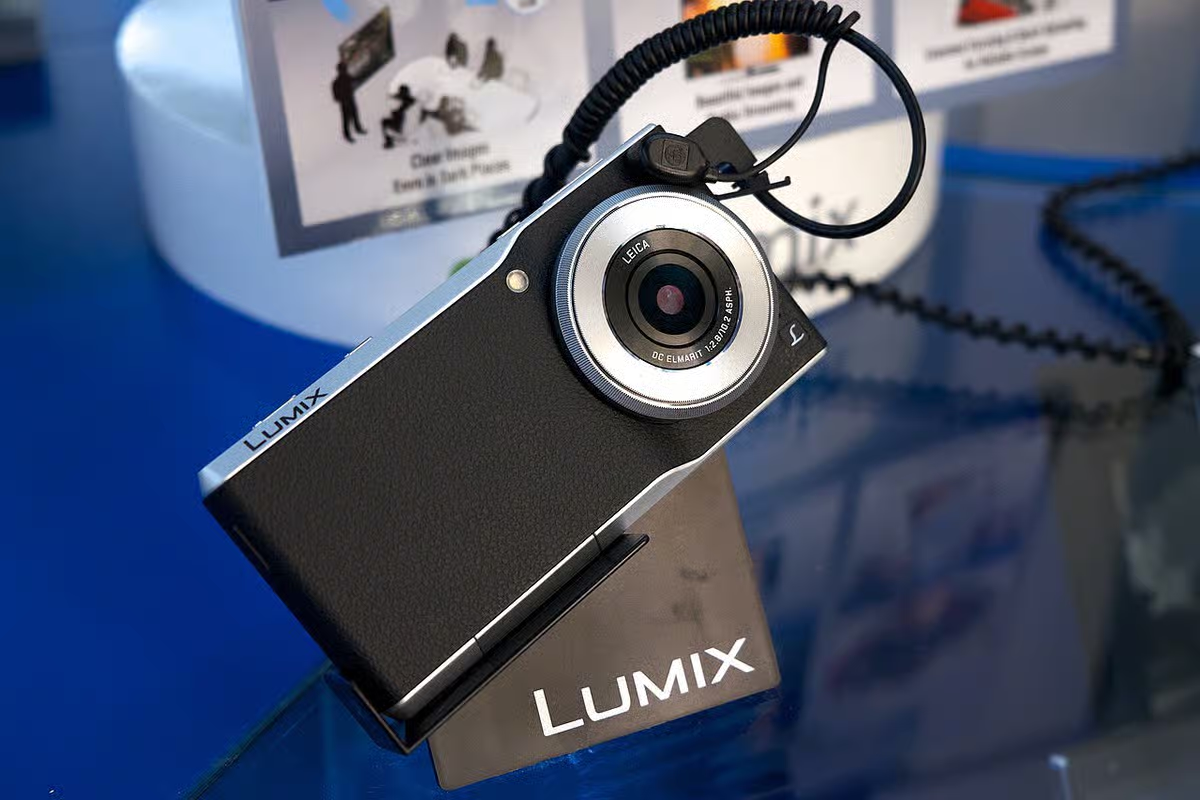
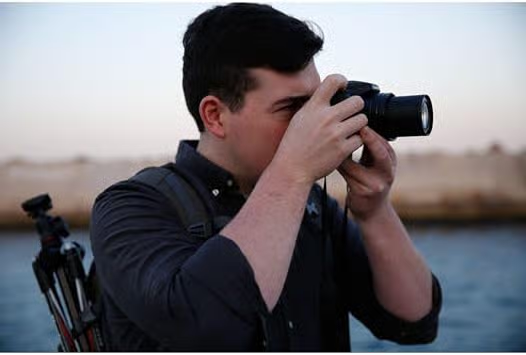
what's your price point? did you consider the article's "disposable film camera" suggestion? the article mentions some high-end compact cameras at $1500 and links their review of point-and-shoots, which includes "The best camera for capturing distant subjects: Panasonic Lumix FZ80D, $435 from Best Buy"
Replying to @Aatube@kbin.melroy.org
Yeah idk why I asked that question without specifying a price point… I’m definitely looking at used market <500… The t6 w/ lense was 220 ish…
That lumix looks nice and the zoom is impressive. Not sure on pocket-able ness.
Replying to @BlackVenom@lemmy.world
check the fifth image on amazon, it's pretty small
Replying to @Aatube@kbin.melroy.org
? Wrong post or what link?
Replying to @BlackVenom@lemmy.world
the article has a link to the lumix on amazon
Replying to @Aatube@kbin.melroy.org
There was always three things that made a standalone camera better than a smartphone camera: larger sensors, better glass, better ergonomics. For most people people those advantages went away once computational photography got good enough and technology improved which allowed for very compact lenses on larger sensors.
I’ve got a different background than most photographers in that I have a lot of experience in testing camera image quality. For me, a full frame mirrorless is still the way I prefer to take photos, as it has noticeably better and more natural looking images due to better hardware. Phone cameras suck in some ways like having realistic depth of field (portrait modes look so bad to me), but they also excel in using image stacking and AI enhancements to alleviate the hardware downsides to the point that I’ll sometimes prefer the phone over the prospect of trying to achieve the same on my full frame.
Replying to @stealth_cookies@lemmy.ca
Also, some of us just aren’t good enough photographers to take advantage of what that full frame mirrorless offers.
Replying to @AbidanYre@lemmy.world
Honestly I would more put it that a lot of people aren’t interested in putting in the work to get the most out of a mirrorless camera. You need to be shooting raw and processing the images. Lots of people who use their phones are great at conceptualizing a photo, they just don’t want to deal with the back end stuff.

Replying to @stealth_cookies@lemmy.ca
For me a good viewfinder makes framing and composition decisions way easier than the phone screen. Especially in bright sunlight.

Replying to @Aatube@kbin.melroy.org
We all?
Strange. My phone doesnt look and feel like a fruit-phone.
Replying to @Appoxo@lemmy.dbzer0.com
Most androids have trash cameras unless you are spending iPhone money on one.
Replying to @Cornpop@lemmy.world
Weird comment. I don’t know how it relates to my comment but sure.
You do you.
Replying to @Cornpop@lemmy.world
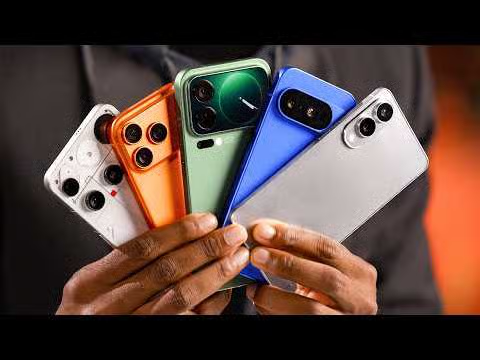 YouTubeSmartphone Awards 2025!
Replying to @Aatube@kbin.melroy.org
Exactaly like I said, you only get a good android camera when you spend iPhone money on one. The winning phone costs $1300-$1600. With the runner up being the iPhone 17 pro that’s $1100-$1500
Replying to @Cornpop@lemmy.world
No? The Oppo Find X9 Pro is $800, including tariffs. (In China, it's ¥5300 while the iPhone 17 Pro is ¥9000.) And take care that it's not just good, it's reviewed as the absolute best of the year.
Replying to @Aatube@kbin.melroy.org
They are not available in the USA. Have to buy unlocked from 3rd party and import it and pay tariffs. So the runner up, the best phone camera you can easily buy here in the USA for me is the iPhone. And even if it is 800, that’s iPhone money still like it said lol
Replying to @Cornpop@lemmy.world
I didn't realize you meant the price of the base iPhone. But for one, at $500, you can get a Pixel 10a, which topped categories in https://www.youtube.com/watch?v=VRoTOE3FqT0. Besides that you can get similar camera quality for $200 by simply buying a phone from four years ago,
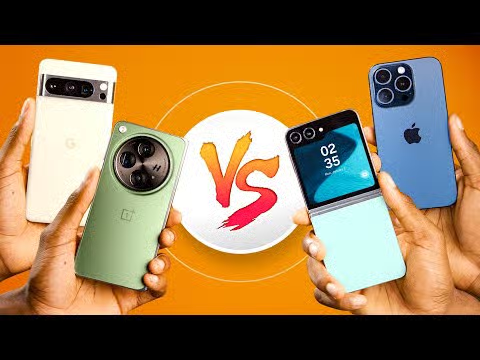 YouTubeThe Blind Smartphone Camera Test Winners!
Replying to @Aatube@kbin.melroy.org
and here’s me never having owned an iPhone
i do agree phone cameras are superb these days

Replying to @PragmaticOne@mastodonapp.uk
it's mentioned in the headline because it's shorter than "smartphone"

Replying to @Aatube@kbin.melroy.org
We switched to phones out of convenience. They took decent enough photos so why carry around a separate camera? That’s the only reason we switched.