posted in Asklemmy

What is something about another culture than your own that you like?
posted in Asklemmy
What is something about another culture than your own that you like?
Replying to @ComradePenguin@lemmy.ml
German humor. (Yes, seriously)
They joke about efficiency/optimization etc. One of them is a man visiting a small grocery shop with the intention of buying some olives.
It start by him asking the price for a glass of olives. What about two? What about 5? etc. prices per glass goes down for each increase.
Then you see him leaving the shop with several large boxes of olives.
Replying to @ComradePenguin@lemmy.ml
The food culture in France. Eating lunch for 2-3 hours (not every day naturally), enjoying tasty, well-prepared food and enjoying fine company.

Replying to @ComradePenguin@lemmy.ml
The Spanish got it figured out with their siestas.
Replying to @Hubi@feddit.org
Also starting each question with the upside down question mark so you know how to read it out loud properly.
Replying to @grandel@lemmy.ml
I’m working on a conlang.
Thanks for that tip.

Replying to @grandel@lemmy.ml
Do they do that informally too? In formal English language writing, the majority of interrogative sentences can be correctly interpreted by their starting with “question words” or helping verbs. This breaks down in informal writing e.g. “you up?” vs ”Are you up?" In the little Spanish I know, I’d say “¿Estas despierto?” (I know I’m missing accents but I speak Spanish way more than I can read it.) Would I still text it to someone that way even though extra characters are what is typically taken off in informal writing? In the English example, the helping verb is removed. In the Spanish version, would the upside down question mark be removed?
Replying to @WhiteOakBayou@lemmy.world
Not at all. It’s even weird to see anyone do it
Replying to @Hubi@feddit.org
Came here to say this
Replying to @Hubi@feddit.org
Oh fuck yes!
Replying to @Hubi@feddit.org
Unsure if it’s the reason for it in Spain, but in parts of Argentina (and surely other places in LatAm too) it’s simply too hot to do anything in the afternoon, so life happens earlier in the morning and later at night

Replying to @ComradePenguin@lemmy.ml
Portuguese desenracanço - inventiveness to make something out of nothing, or get by in difficult circumstances.
Replying to @ComradePenguin@lemmy.ml
I’m not a big fan of India, but their cuisine and especially its focus on vegetables instead of meat is something I always thought was great
I’m not vegetarian or anti-meat or anything like that, but eating more vegetables and less meat is good not only for your health, but also the planet IMHO
Replying to @JWTB@lemmy.today
In general I’m jealous of countries where the norm is for them to eat healthier food. I grew up eating the typical crap 'Murican diet and it’s left me very unhealthy. I’ve been trying desperately to change that, but it’s such a slow process to change what you’re used to. I get repulsed by things that people in other countries just look at as at worst a normal part of their diet or sometimes they even actively like it. I wish I had grown up being socialized on that before things got so out of hand.
Replying to @darthelmet@lemmy.world
Post soviet and balkan countries are similar, because meat consumption (and being fat in general) used to be a status symbol, especially pork, which is particularly unhealthy compared to e.g. chicken
Luckily this started drying up in the early 2010s, but you can still find (or rather, accidentally run into) restaurants where the whole point is that they put a truckwagonload of food on your plate for you to “enjoy” (that’s typically mediocre at best, and sub-mediocre and unhealthy at the usual), and you can find people, typically older or rural folks who, if asked how a particular restaurant was, 95% of their answer would be about the portion itself, and rarely about the quality, atmosphere, etc.
So overall food has started becoming much better over the last decade and half, but most restaurants are still very much afraid of putting smaller portions of higher quality food on your plate because of potential backlash or criticism

Replying to @ComradePenguin@lemmy.ml
The French widely mistrust their politicians.
Replying to @DarrinBrunner@lemmy.world
I was also coming in to say I envy the French tendency to fuck shit up when their politicians act like scumbags. In the US we just drool and watch fox news tell us it’s actually for our benefit that we sacrifice our lives for billionaires.

Replying to @DarrinBrunner@lemmy.world
Not enough, apparently.
Japanese not wearing shoes indoors / providing slippers for guest’s and picking up after yourself or just making sure the space is clean before you leave. Also bath house culture.
Replying to @agentTeiko@piefed.social
We don’t do the slippers thing but here in Canada we don’t wear shoes indoors either. I shake my head when I see people in American TV shows laying on a bed with their shoes on lol.
Replying to @CrabAndBroom@lemmy.ml
It’s one of the very few major cultural divergences between the two. As in one severe enough it could cause a misunderstanding. Maybe the only one, IDK.
Wanda Sykes?
When Black people try to act White, they act snooty and superior.
When White people act Black, they dress like idiots and sound like morons.
When people try to act Chinese they exercise, eat fresh veggies, and read books.
Replying to @ComradePenguin@lemmy.ml
Slow, mindful, deliberate living and working.
Replying to @Maeve@kbin.earth
And which culture is that?
Replying to @tias@discuss.tchncs.de
There are several, mostly indigenous.
Replying to @ComradePenguin@lemmy.ml
I like the cultures that have leaned more into socialism. Not just for the practical benefits to society, but because they just seem to be more caring and community oriented in general. In the US I always feel so isolated. There are all sorts of norms that put up barriers between people and can make people feel like they’re on their own when they need help. I’d like to live somewhere where people would care and do something if their neighbors needed help or where I wouldn’t feel so weird talking to strangers. Maybe this is too idealized. I know no culture is a monolith, but there seem to be some better tendencies in other countries.
EDIT: For all the time I’ve spent watching anime (including 2 trips to Japan), I have a hard time thinking of much I actually admire about actual Japanese culture. They’ve got the toxic work culture, they’ve got the confucian family thing going on, there’s the xenophobia, and then there’s their… suspicious obsession with some other questionable countries like the US, UK, and Germany. I guess anime can be funny and they have nice trains. So at least they have that. Oh I guess they also seem to be more chill when it comes to religion. Like it’s still there, but it doesn’t seem like the intensity of it is enough to cause regular problems like it does in the Western world.
Replying to @ComradePenguin@lemmy.ml
Dutch cycling culture
French long lunches
Spanish siestas
Portuguese late dinners
Italian punctuality

Replying to @ComradePenguin@lemmy.ml
Ayurveda, Curry.
Replying to @Digit@lemmy.wtf
livin la veda loca
Replying to @ComradePenguin@lemmy.ml
Vietnamese: The absolute bonkers way they combine a turbocapitalistic hustle culture with slow living / enjoying life

Replying to @ComradePenguin@lemmy.ml
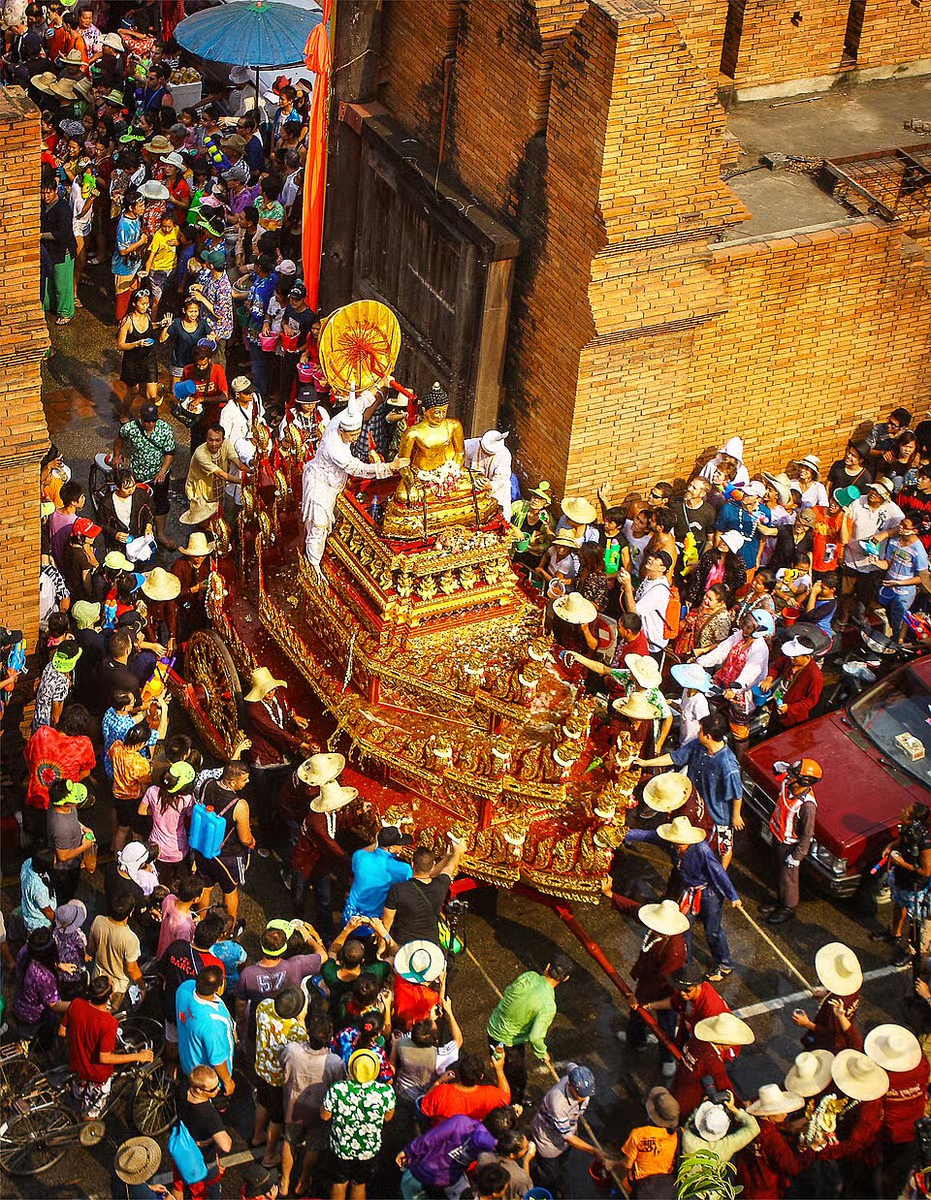
Songkran in Thailand.
Live in hot country, so New Year celebration is to hit the streets and have an all in waterfight!
“Celebrations are known for public water fights, which symbolize ritual cleansing.”
 en.wikipedia.orgSongkran (Thailand) - Wikipedia
Replying to @ace_garp@lemmy.world
So much fun. It takes place during the hottest time of the year.
Replying to @ComradePenguin@lemmy.ml
Peru - super fresh, locally grown food; incredibly hard working people who are super friendly
Ireland - craic
New Zealand - respect of the environment, freedom camping
France - long luxurious meals with family/friends; delicious pastries; willing to burn shit down when political leaders forget who they work for
Replying to @ComradePenguin@lemmy.ml
They all have something. It’s like just statistically inevitable, since none of them were really designed.
Pretty much every culture other than progressive Western has stronger extended families, which is nice. Squatting is a great way to sit if you start young. Both eating everything with four legs except a table, and being vegetarian are more logically consistent dietary preferences. Toilet paper is dumb.
Languages are pretty similar. English has some nice features, but having a word for the day before yesterday would be handy, for example.
Replying to @CanadaPlus@lemmy.sdf.org
Norwegian have forgårs which means the day before yesterday. It’s used a lot, it’s surprising English does not have a word for this. Is the most common way: 2 days ago?
Replying to @ComradePenguin@lemmy.ml
you mean ereyesterday? it hangs out with overmorrow.
Replying to @ComradePenguin@lemmy.ml
Позавчера (pozavchyera) in Russian. Pretty sure French has something as well.
Usually you do just say “the day before yesterday/last”, and it’s super awkward. Nothing else is guaranteed to be understood (people are being creative with the new words in this thread). It’s the same for “the day after tomorrow”. Two days ago might also work, but that could mean different things, depending on if you’re counting the present day or not.

Replying to @CanadaPlus@lemmy.sdf.org
Yesterday eve
Replying to @ComradePenguin@lemmy.ml
Persian food, especially the rice dishes.

Replying to @ComradePenguin@lemmy.ml
Russian, German, and Albanian music
Replying to @ComradePenguin@lemmy.ml
I have always found saris really exquisite. But as a white lady from the Midwest USA, and no people in my life at all from cultures that wear them, it would be weird to have or wear one. I’d never want to wear it like a costume but they are so beautiful.
Similarly, bunad here in Norway where I live now. I didn’t grow up here and I only skate by on languages most of the time, I’m not tied to the culture by marriage or children. I just love it here. But because I’m just an immigrant, I’d feel strange wearing one. But one of my absolute favorite parts of 17 May celebrations (Constitution Day) is going out in the city and seeing all of the various bunad from different regions of Norway. I don’t know if I’ll ever feel Norwegian enough to wear one without feeling like an impostor/appropriator.
Replying to @SelfHigh5@lemmy.world
Totally agree on the sari, was at a friend’s wedding and the bridesmaids were all wearing them, many of them white but the bride was Indian. Was so jealous that they had the opportunity to wear them, and not just wear but get fully dressed up for the event.
Replying to @ComradePenguin@lemmy.ml
Really petty but I’m jealous of Norways football crowd activity where everyone pretends to row a boat.
Replying to @yermaw@sh.itjust.works
Oh yeah, that was awesome!
Replying to @ComradePenguin@lemmy.ml
I hang out with drunk Chinese people for work and there is no friendlier bunch around. I also admire the Chinese cultural focus on gardening and growing plants
Replying to @ComradePenguin@lemmy.ml
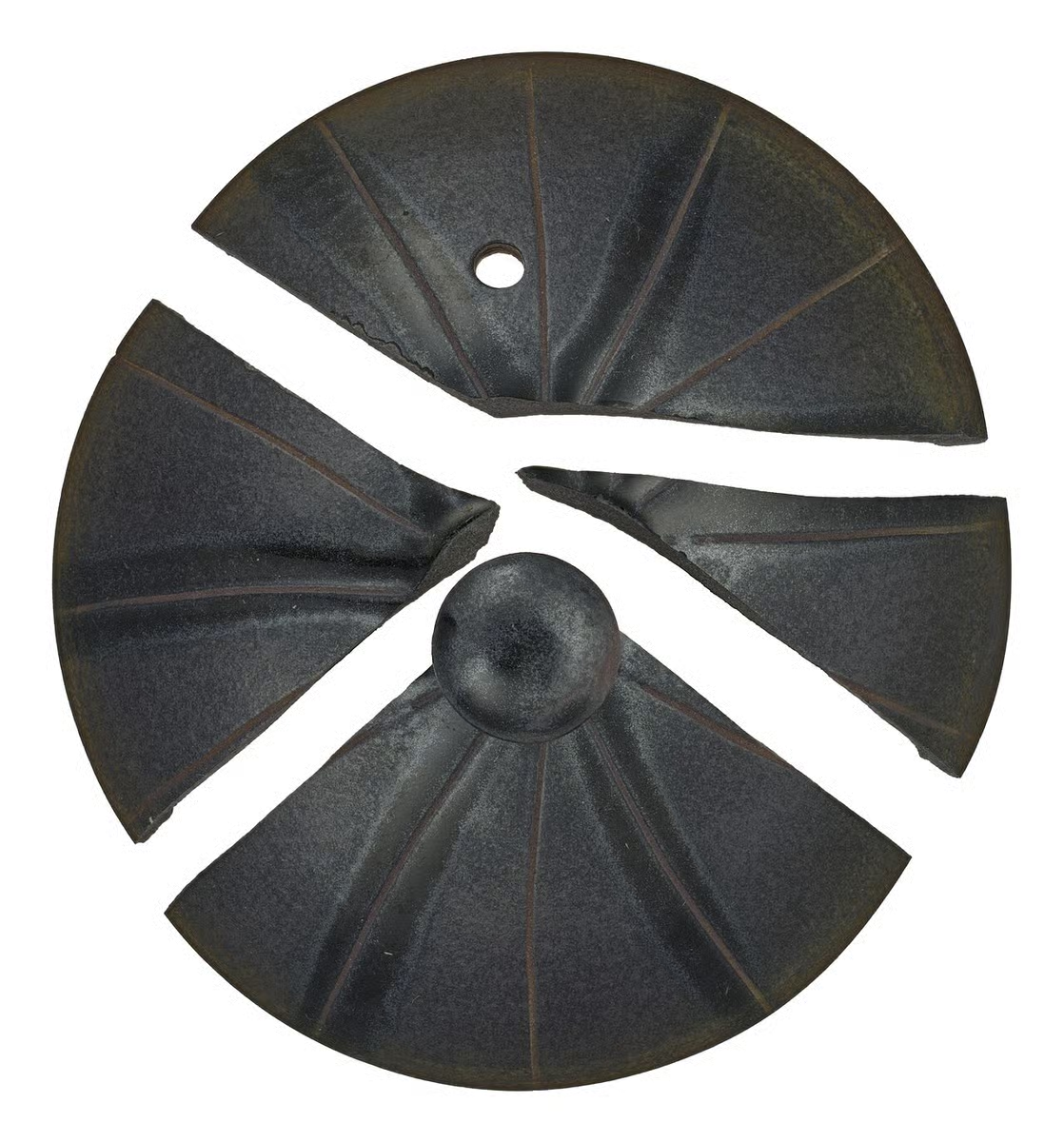
I don’t remember what it’s called, but in Japan there is a tendency to repair things rather than replace them; and further than that, a repair made properly can be see as enhancing the beauty of an object. I like that.
Replying to @Weydemeyer@lemmy.ml
 en.wikipedia.orgKintsugi - Wikipedia
Replying to @ComradePenguin@lemmy.ml
Tipping culture, the lack of it everywhere but the US seemingly. Tips as a substitute for wages is awful. In the US servers are paid inadequately without tipping and so a culture of tipping is the norm.
Replying to @mossberg590@lemmy.world
Meh, lots of that exists in Canada and mexico as well, unfortunately

Replying to @phoenixz@lemmy.ca
It’s not quite the same in Canada, though. Even when we used to have a different minimum wage for tipped workers, it was only a couple dollars per hour less than regular minimum wage. As far as I know, servers are now paid the same minimum wage as everyone else here. I’ve seen people say that server minimum wage in the US can be like $2 an hour.
Replying to @RoquetteQueen@sh.itjust.works
Sure, but last time I bought a bread in Vancouver I had the option to tip 18, 20, or 25%, or nothing
So I click nothing and deal with the looks. I’m sorry, not sorry, tipping is just abusive
Replying to @ComradePenguin@lemmy.ml
Im a US American, how much time do you have? There is almost no aspect of my culture I wouldn’t trade for another. Music I’ll keep but everything else… meh
Replying to @Hazmatastic@lemmy.world
I quite often feel americans show a lot of interest in new people they meet. If I tell something about myself usually they think its ‘amazing’ or ‘wonderful’, ask questions, not often steer the conversation to themselves. I think thats a quite nice cultural thing you have.
Replying to @Hazmatastic@lemmy.world
Travelers from elsewhere report Americans are unusually friendly and kind to strangers; very approachable. There’s much more of a guarded or even competitive vibe, elsewhere. Anglo North America is also a very smiley culture (as in polite smiles). You can like or dislike that, but Thailand is as well, and they advertise it as a selling point.
All the things people like about developed countries in general apply - it’s hard being gay in, say, Africa. Obviously the trends in the US aren’t great, but there’s a long way to go down.
Replying to @ComradePenguin@lemmy.ml
Hospitality in the middle east

Replying to @ComradePenguin@lemmy.ml
Yerba mate and dulce de leche (though not together)
Replying to @ComradePenguin@lemmy.ml
Punjabi drinking. Party hard or don’t party at all, I say!
Replying to @ComradePenguin@lemmy.ml
In Japan I like how everyone keeps left on escalators so folks have a path to walk up on the right if they want to. Also Japanese drivers were the most careful and patient out of like 6 countries I ever got to visit. Italian drivers were at the other end of the spectrum.

Replying to @ComradePenguin@lemmy.ml
public transit, culture, healthcare, no mass shootings or very little