Replying to @⁨yesman@lemmy.world⁩

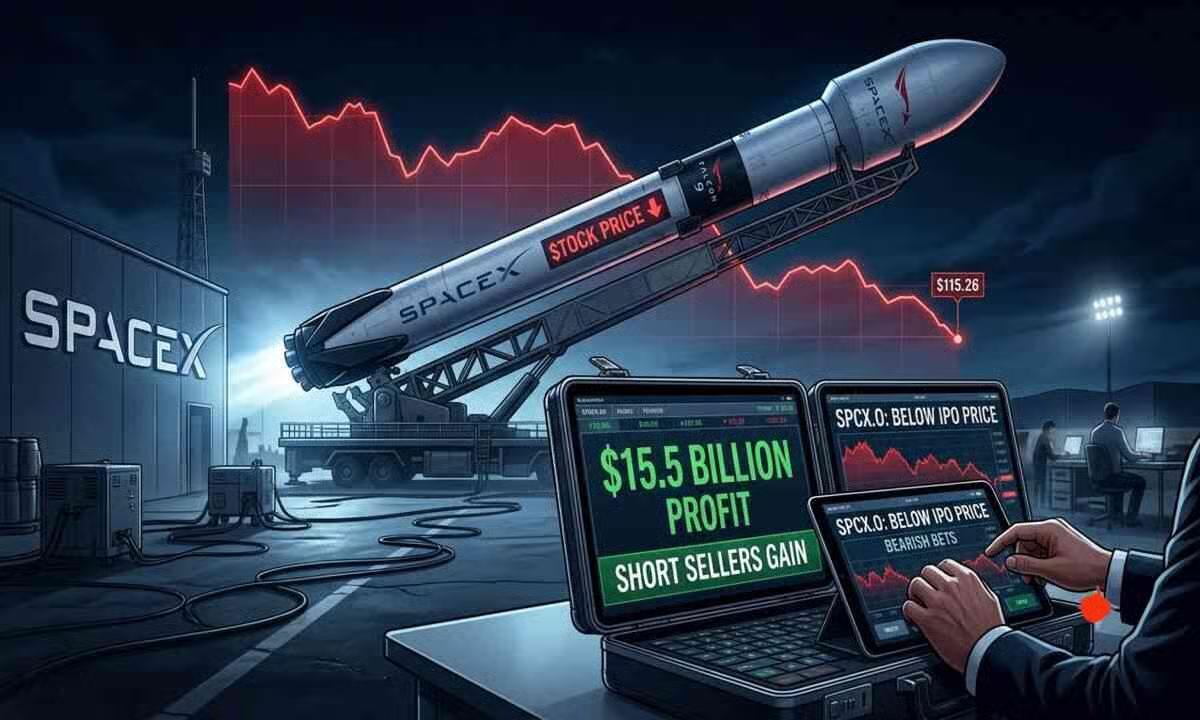
Unlike the market cap numbers that get thrown around when people say X dollars “destroyed” from the stock market or Y dollars “gained”, this isn’t nearly as imaginary (or invented out of ether).

Depending on whether we’re talking about real shorting, or put options, it’s one of two things:

  1. They borrowed expensive SpaceX shares, sold them, bought back for cheaper, the people who bought shares at the higher price paid for it.

  2. They bought put options and exercised them. The bank or financial organization selling the put options paid for it.

Now I went to actually read the article and this particular number was #1, but I’m sure a lot of people profited through #2 as well (the wallstreetbets types).

Replying to @⁨yesman@lemmy.world⁩

Short sellers are an important part of the equity ecosystem as it provides downward pressure in price discovery. Lucky gamblers have made, and are making, far more than that with long positions in equity and options.

It’s difficult to say that we don’t need markets at all (e.g. would you plant cotton with no idea what it will sell for at harvest?). It then becomes a slippery slope of abuse and wealth concentration.

If anything this all feels like a failure of regulation and the SEC not going far enough

Replying to @⁨yesman@lemmy.world⁩

Investment provides resource allocation, which is not something that just happens on its own. That is, it says “this company or project is a worthwhile project to allocate capital to, and this is not”. The money here was also not invented out of ether, but rather lost by investors who shifted capital to SpaceX earlier, and gained by those who tried to shift capital away from SpaceX earlier; other investors came to agree with those shifting capital away. Those who do so earlier are rewarded; this encourages earlier efficient movement of capital.

Resource allocation is a necessary part of economic activity; any economic system will require such a thing to be done. You could have your government do it instead of investors, as in a command economy. Countries generally don’t do that, because it has run into more serious problems of misallocation.

en.wikipedia.orgPlanned economy - Wikipedia