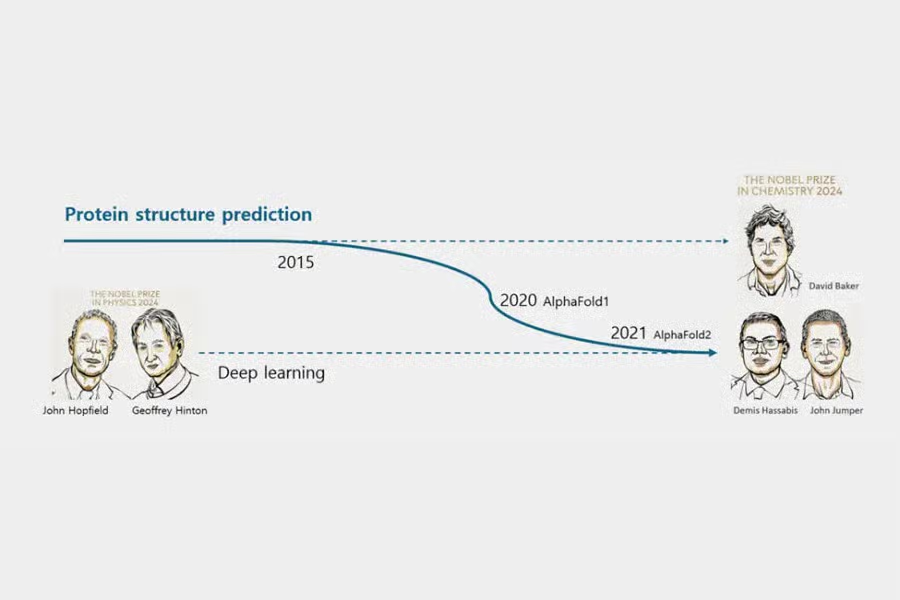
To be clear, I wasn’t necessarily disagreeing about AI’s utility, just about how protein fold AI isn’t the same as LLM AI; we’ve used computer models for predictions of protein structure and genetic mutation severity for a while, though they have always been taken with a grain of salt that I fear is no longer being done - a prediction is still a prediction, after all. Doctors were already incorrectly confusing computer model predictions of genetic mutation severity for positive test results back when I was working as a genetic counselor in the 2010’s - my concern is that the widespread trust of “AI” is only going to exacerbate that.
I’m a bit confused, though. The AI doing it was AlphaFold, which is shutting down. Shouldn’t your statement be AI was already doing it? Gemini is an LLM - not the same type of thing as AlphaFold, despite the fact that they’re both called “AI,” which was the cause of my original argument. The AI that was doing the protein fold prediction is being replaced with an “AI” that can’t. It looks like there’s still RoseTTAFold, but losing the frontrunner is still not great when it’s shutting down to focus more on LLM’s.

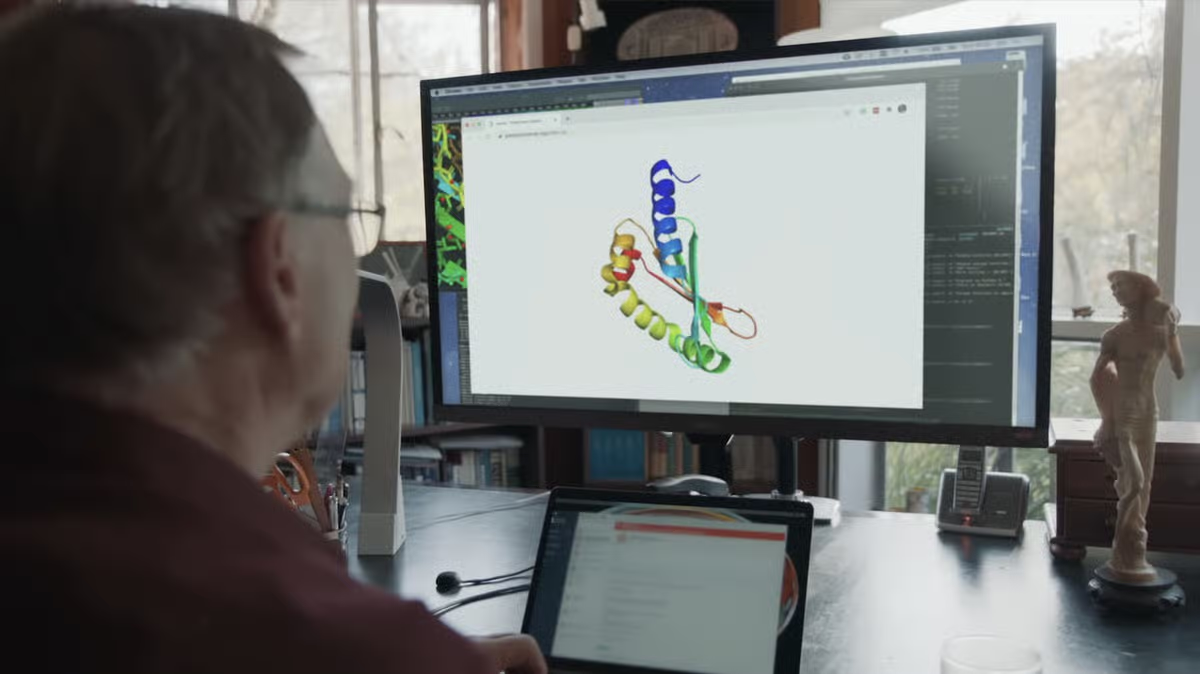 EngadgetGoogle shuts down its Nobel-prize winning AlphaFold project as it focuses on Gemini - EngadgetDeepMind's award-winning AlphaFold team is no more.